The Experience That Comes Only With Age
Some lessons in life only make sense when we experience them ourselves. As we grow older, we begin to understand the value of relationships, the reality of success, the pain of mistakes, and the wisdom hidden in advice we once ignored.

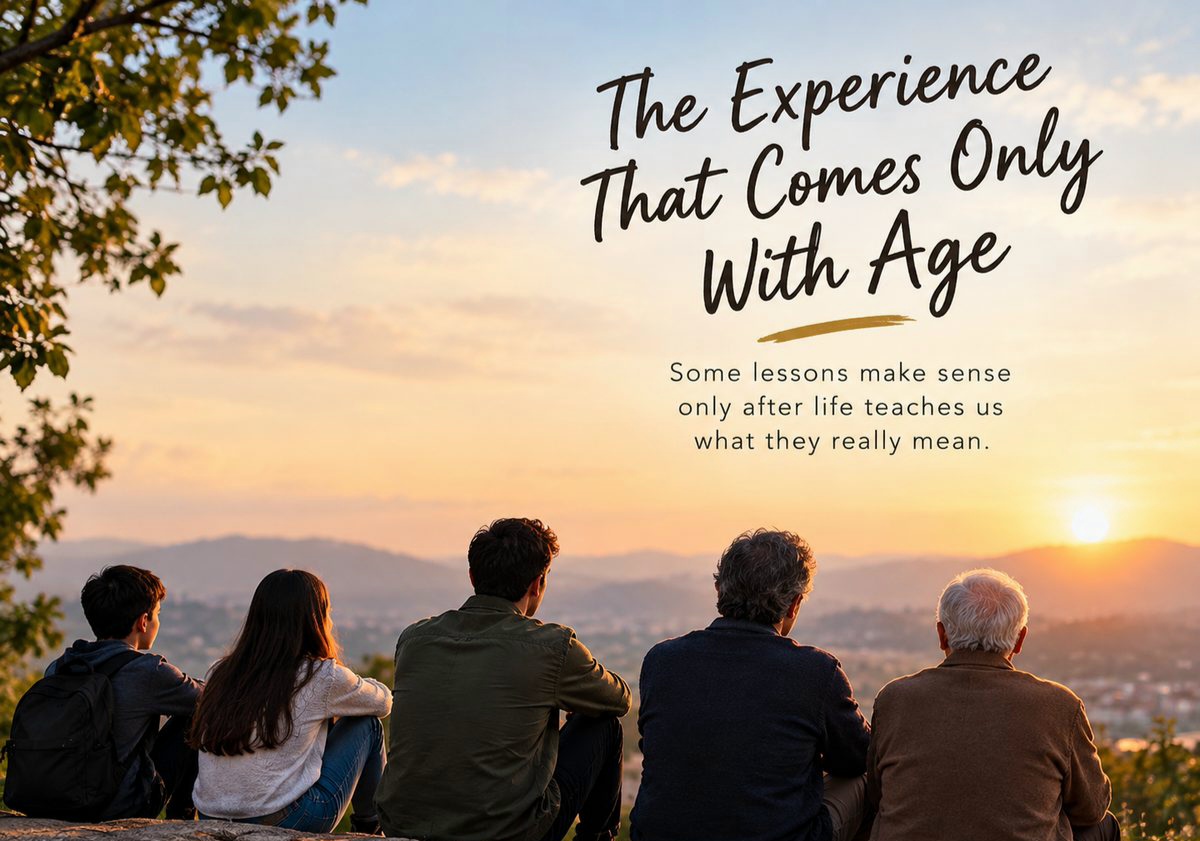
Some lessons make sense only after life teaches us what they really mean.
Have you ever remembered someone's advice years later and thought, I wish I had understood that back then?
Perhaps an older colleague told you not to trust everyone too quickly. A friend advised you not to make decisions in anger. Or someone reminded you to slow down and enjoy life instead of constantly chasing the next big thing.
At the time, you probably didn't think much of it. You had your own plans, your own opinions and your own way of looking at the world.
Then life happened.
Someone you trusted disappointed you. A friendship you thought would last forever slowly faded away. You finally got the job you wanted, only to discover that success brought its own worries.
And suddenly, you remembered those words.
This time, they made sense.
Not because the advice had changed, but because you had finally experienced what it meant.
Perhaps that's one of the strangest things about growing older. We spend years hearing lessons that only become meaningful when life gives us a reason to understand them.
When We Think We Know Better
There is something beautiful about being young. The world feels full of possibilities, and we believe we can handle whatever comes our way.
We want to succeed early, make our own decisions and prove that we can build the life we want.
When someone tells us to be careful, we may think they lack courage. When they advise us to be patient, we wonder why they aren't more ambitious.
But there is a difference between believing you can handle something and understanding what handling it might involve.
An experienced colleague may warn you against leaving a stable job without a plan. You might see fear in their advice. What you don't see is the memory of the financial difficulties they faced when things went wrong.
Someone might tell you to choose your friends carefully. You may think they are being unnecessarily suspicious, until a person you trusted lets you down.
Their advice isn't automatically right just because they are older. The world changes, and experience doesn't make anyone an expert on everything.
But sometimes, their words come from places we haven't been yet.
Perhaps the mistake isn't that we disagree with experienced people. It's that we sometimes dismiss their advice before understanding the experience behind it.
Sometimes, You Have to Make the Mistake Yourself
Think about a decision you once made despite someone's warning.
Maybe you trusted a business partner who seemed genuine. Perhaps you spent money you should have saved. Or you stayed in a relationship, hoping things would change, even when the signs suggested otherwise.
At the time, you had your reasons. You weren't necessarily foolish. You were making a decision based on what you knew, what you felt and what you hoped would happen.
Then reality turned out differently.
What hurts isn't always the mistake itself. Sometimes it's remembering that someone tried to warn you.
But there is little value in spending years blaming yourself for not knowing then what you know now.
We all make decisions with an incomplete understanding of what lies ahead. The important thing is whether we learn from the outcome.
A mistake doesn't automatically make us wiser. We become wiser when we recognise what went wrong and allow that experience to influence our next decision.
Some lessons are expensive. Others cost us time, trust or peace of mind.
And occasionally, the lesson is simply that we should have listened a little more carefully.
When You Finally Get What You Wanted
Remember something you desperately wanted a few years ago.
Perhaps it was a promotion, a better salary, a bigger home or the recognition of people who never seemed to notice your efforts.
You imagined that reaching that milestone would finally make you feel successful.
So you worked hard, sacrificed your free time and kept telling yourself that happiness was waiting at the next destination.
Then you arrived.
You felt proud, and you had every reason to. But after the excitement settled, everyday life returned, bringing new responsibilities and fresh worries.
You discovered that a higher salary could improve your lifestyle without guaranteeing peace of mind. A prestigious job could earn you respect without making every morning enjoyable.
Success still mattered, but it wasn't the complete answer you had imagined.
Perhaps this is why many people begin to value different things as they grow older.
A peaceful evening becomes more important. So does a meal with family, a genuine conversation with a friend or simply having the time to enjoy an ordinary day.
These things were always there. We just didn't give them enough attention.
Sometimes, we spend so many years chasing the life we want that we forget to appreciate the life we already have.
The People We Take for Granted
When we're young, we often assume that certain people will always be around.
We postpone calls, delay visits and tell ourselves there will be another weekend to catch up.
Then life gets busy.
Friends move to different cities. People change jobs, start families and develop responsibilities that leave less room for the relationships they once took for granted.
Sometimes there is an argument. Sometimes someone disappoints us. And sometimes, nobody does anything wrong. Life simply carries people in different directions.
One day, you realise you haven't spoken to someone who once knew almost everything about you.
It feels strange. How can someone who was such a big part of your life become someone you barely speak to?
As we get older, we begin to understand that not every relationship will stay the same. Some friendships last a lifetime; others belong to a particular chapter of our lives.
That doesn't make those memories any less meaningful.
We also begin to appreciate the ordinary moments we once overlooked: a friend calling just to check on us, a familiar voice, an invitation we repeatedly declined because we were too busy.
We rarely know which ordinary day will become a memory we wish we could revisit.
That is why it matters to make time for the people who matter to us. Not every relationship can or should be saved, but the good ones deserve more than whatever time we have left after everything else.
When Life Doesn't Go According to Plan
Most of us grow up believing that if we work hard, behave honestly and make sensible decisions, things should eventually work out.
Often, they do. But not always in the way we expect.
You can work harder than everyone else and still be overlooked. You can treat someone well and still be hurt by them. You can spend years building a plan, only to have circumstances change everything.
It's difficult to accept because we want life to be fair. We want our efforts to lead to the outcomes we deserve.
But life involves other people, unexpected circumstances and things beyond our control.
Experience doesn't make disappointment disappear. It teaches us that disappointment is part of life, not proof that our lives have failed.
After a few difficult experiences, we may become better at separating what we can change from what we cannot.
Instead of asking only, "Why did this happen to me?" we begin asking, "What can I do now?"
We still feel hurt. We still worry about the future. But we become less likely to believe that one setback defines everything that comes after it.
Sometimes, moving forward is the only answer available to us.
And sometimes, that is enough.
The Comparison Trap
Today, comparison is almost impossible to escape.
We open our phones and see someone our age buying a house, travelling abroad, starting a business or celebrating an achievement.
Meanwhile, we may be struggling to pay bills, trying to figure out our careers or wondering why our lives aren't moving as quickly as we hoped.
It's easy to feel left behind.
The problem is that we compare our everyday lives with selected moments from someone else's.
We don't know the full story behind every success we see. We don't know what someone has sacrificed, what worries they carry or what difficulties they face privately.
And sometimes, their lives really are going well. That's fine, too.
Someone else's success doesn't mean you have failed.
With experience, we begin to understand that life isn't a race in which everyone must reach the same destination at the same time.
Some people find their direction early. Others take years to discover what they really want. Some build financial security in their twenties, while others start again much later.
There is no single timetable that works for everyone.
You can admire another person's achievements without using them as evidence against yourself.
Perhaps the better question isn't, "Why am I not where they are?"
It's, "Am I building a life that makes sense for me?"
One Day, You'll Be the Person Giving the Advice
There comes a time when you find yourself on the other side of the conversation.
Perhaps a younger colleague asks for your opinion about a career decision. Maybe a friend is about to make a mistake you once made yourself. Or someone in your family is struggling with a situation you have already experienced.
You try to explain what you learned.
You tell them to be patient, think carefully or avoid making the same mistake you made.
They listen, but you can tell they aren't convinced.
And you remember being exactly the same.
It's frustrating when someone ignores advice that could save them trouble. You want them to understand before they experience the consequences themselves.
But you also know that you cannot live another person's life for them.
You can share your experiences and explain why you see things differently. You can offer support without trying to control every decision they make.
After that, they must find their own way.
If you're the younger person in that conversation, remember that listening doesn't mean giving up your independence. You can disagree with someone and still recognise the value of their experience.
Sometimes, asking one simple question can change everything:
"What happened in your life that made you see it this way?"
You might discover that their advice comes from an experience you have never considered.
And even if you choose a different path, you'll make that decision with a better understanding of what lies ahead.
Age Doesn't Automatically Make Us Wiser
Growing older doesn't guarantee that we become kinder, wiser or more understanding.
Some people repeat the same mistakes for decades. Others become so attached to their opinions that they stop listening to anyone else.
And there are young people who show more patience, empathy and understanding than people twice their age.
What matters isn't simply how long we have lived, but what we have learned along the way.
Can we admit when we're wrong? Have we become more considerate of other people's feelings? Can we accept that our own experiences don't give us all the answers?
These are the things that make experience valuable.
Over time, we may become less interested in winning every argument and more interested in understanding where the other person is coming from. We may judge people less quickly because we realise that we rarely know the full story.
And perhaps we finally learn to forgive our younger selves for decisions we would make differently today.
You cannot go back and become the person you wish you had been ten years ago. But you can use what you know now to make better choices tomorrow.
There is little value in spending the rest of your life punishing yourself for lessons you have already learned.
Before You Go, Think About This
Is there something you understand today that you couldn't understand ten years ago?
Perhaps you once thought your parents worried too much, until you became responsible for someone you loved.
Maybe you believed a friendship would last forever, only to discover that relationships need more than shared memories to survive.
Perhaps you spent years chasing success before realising that time, peace of mind and the people around you mattered just as much.
What would you tell your younger self if you had the chance?
Would you say, "Slow down"? Would you tell yourself to stop worrying about other people's opinions? Or would you simply remind yourself that one mistake doesn't have to ruin your future?
Whatever your answer, remember to give your younger self a little understanding.
Back then, you were doing the best you could with what you knew. You had hopes, fears and expectations. You were still learning.
And the truth is, you're still learning now.
Growing older doesn't mean we eventually figure everything out. There will always be situations we haven't faced, people we struggle to understand and decisions we aren't sure how to make.
But perhaps we become a little more patient with ourselves and others. We learn to think before reacting, appreciate people while they are still around and accept that being right isn't always the most important thing.
We begin to understand that the people who advised us weren't always right, but they weren't always wrong, either.
Some lessons can be explained. Others need time, experience and sometimes a few mistakes before they truly make sense.
Perhaps the real experience that comes with age isn't knowing everything. It's finally understanding why we didn't know so much in the first place.
And one day, you may find yourself sharing that lesson with someone younger, hoping they will understand.
Just as someone once hoped you would.
Share your thoughts in the comments.