The Quiet Revolution: How Artificial Intelligence Is Changing Our Lives, One Small Moment at a Time
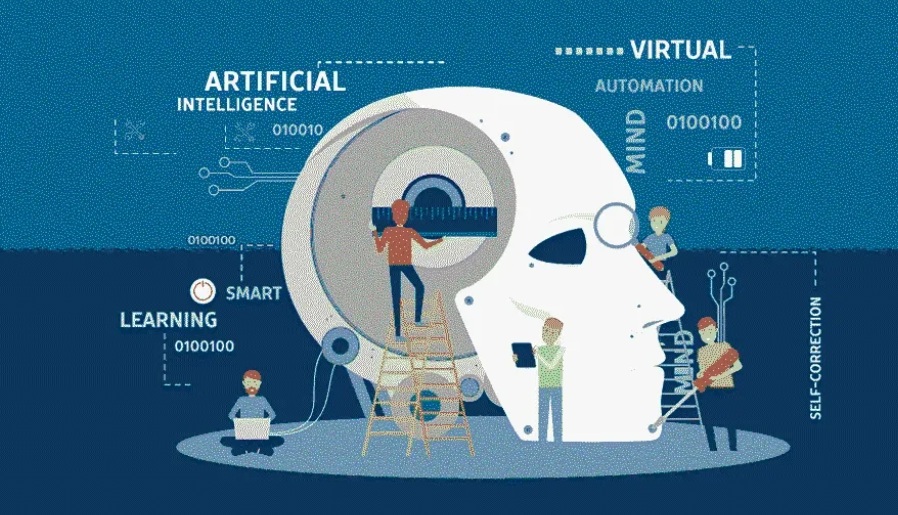
When people talk about Artificial Intelligence, the conversation often swings between extremes. Some imagine a future where machines replace humans. Others dismiss it as just another technology trend. The reality is far less dramatic and far more interesting.

The reality is far less dramatic and far more interesting.
AI is not arriving with a bang. It is arriving quietly.
It's helping a student understand a difficult concept at midnight. It's helping a doctor spot a tumor earlier. It's helping a working parent reclaim an hour of their day. It's helping a small business compete with much larger companies.
The true story of AI is not about machines.
It's about people.
We Already Live Alongside AI
Most of us use AI dozens of times a day without realizing it.
When Google Maps suggests a faster route to avoid traffic, AI is at work.
When Netflix somehow knows exactly what movie you'll enjoy on a Friday night, AI is involved.
When your bank flags a suspicious transaction before you even notice it, AI is protecting you.
These moments feel ordinary because they have become ordinary.
The most successful technologies often disappear into the background. Electricity, the internet, and smartphones eventually became so integrated into our lives that we stopped thinking about them as innovations. AI is beginning to follow the same path.
In fact, the adoption of AI tools has been among the fastest in technology history, with AI assistants reaching hundreds of millions of users worldwide in just a few years.
The Student Who No Longer Has to Learn Alone
Ask almost anyone about a subject they struggled with in school and you'll hear a familiar story.
They sat in a classroom, fell behind on a topic, and were often too embarrassed to ask the same question repeatedly.
Today, many students are experiencing something different.
A high school student preparing for an exam can now ask an AI assistant to explain a mathematical formula five different ways. A university student can request simpler explanations of complex theories. Language learners can practice conversations without fear of judgment.
The remarkable thing isn't that AI provides answers.
It's that it provides patience.
Human teachers remain irreplaceable. They inspire, mentor, and understand emotions. But AI is becoming a useful companion that gives students unlimited opportunities to learn at their own pace.
For many young people, the greatest educational advantage isn't access to information.
It's access to personalized guidance.
A New Kind of Assistant at Work
Think about the last week at work.
How much time did you spend writing emails, summarizing meetings, searching for information, building presentations, or updating reports?
For many professionals, those activities consume a significant portion of their day.
A project manager recently described AI not as a replacement for work but as "the intern I always wished I had."
The comment was simple but revealing.
AI helps organize notes, draft first versions of documents, summarize lengthy conversations, and analyze large amounts of information. Tasks that once required hours can often be completed in minutes.
That doesn't mean work disappears.
It means more time can be spent on the parts of work that matter most:
- Solving problems
- Making decisions
- Building relationships
- Creating new ideas
- Leading teams
According to research from McKinsey, generative AI could contribute between $2.6 trillion and $4.4 trillion annually to the global economy through increased productivity and innovation.
Behind those enormous numbers are millions of small moments when people spend less time on routine tasks and more time on meaningful work.
The Real Impact in Healthcare
Few areas illustrate the potential of AI more clearly than healthcare.
Imagine a radiologist reviewing hundreds of images each week. Even the most skilled professionals can experience fatigue after long hours of concentrated analysis.
AI can now act as a second set of eyes.
Recent studies have demonstrated that AI-assisted screening systems can help identify cancers that might otherwise be difficult to detect, improving early diagnosis rates.
But the impact extends far beyond medical imaging.
The World Health Organization reports that AI is already being used in diagnosis, clinical care, drug development, disease surveillance, outbreak response, and health-system management.
A doctor still makes the final decision.
A nurse still comforts the patient.
A family still provides emotional support.
AI doesn't replace the human side of healthcare.
It strengthens it.
Small Businesses Are Getting Bigger Opportunities
One of the most overlooked benefits of AI is how it empowers individuals and small businesses.
A decade ago, professional marketing materials, deep customer analytics, and large-scale content creation were advantages reserved for organizations with significant budgets.
Today, a small business owner can use AI to:
- Create marketing campaigns
- Design promotional content
- Analyze customer feedback
- Draft social media posts
- Improve customer support
The technology hasn't eliminated competition.
It has made competition more accessible.
For many entrepreneurs, AI isn't replacing employees.
It's allowing them to accomplish more before they're able to hire their first employee.
Giving People Something More Valuable Than Money: Time
When discussing technology, we often talk about efficiency.
But efficiency is really about something deeper.
Time.
Consider a working parent who spends less time preparing reports because AI helps summarize information.
Consider a teacher who spends less time grading routine assignments.
Consider a doctor who reduces administrative workload.
Consider a student who learns faster.
The common thread isn't technology.
It's reclaimed time.
And what people do with that time can be life-changing.
They spend it with family.
They exercise.
They learn new skills.
They start businesses.
They pursue ideas they've postponed for years.
The greatest gift AI may provide is not automation, but the freedom to focus on what matters most.
Creativity Is Evolving, Not Disappearing
One of the biggest misconceptions about AI is that it threatens creativity.
In practice, many creators are experiencing the opposite.
Writers use AI to brainstorm ideas and overcome writer's block.
Designers use it to rapidly explore concepts.
Filmmakers use it to streamline production.
Musicians use it to experiment with new styles.
The creative spark still comes from humans.
AI simply accelerates exploration.
Throughout history, creative professionals have embraced new tools, from cameras and digital editing software to graphic tablets and music synthesizers.
AI is becoming the next tool in that evolution.
The artist still imagines.
The writer still tells the story.
The musician still creates the emotion.
The tool simply expands what's possible.
The Challenges Are Real
No transformative technology arrives without complications.
Questions surrounding privacy, data security, misinformation, bias, and workforce disruption deserve serious attention.
AI systems can be wrong.
They can reflect biases present in their training data.
They can be misused.
The World Health Organization has emphasized the importance of governance, ethical standards, transparency, and responsible adoption as AI continues to expand across industries.
The goal should not be blind optimism or fear.
It should be responsible progress.
Every generation faces the challenge of ensuring powerful technologies are used wisely. AI is no exception.
The Future Is Not About AI Replacing Humans
The most important lesson from every technological revolution is that people adapt.
Calculators didn't eliminate mathematicians.
Word processors didn't eliminate writers.
The internet didn't eliminate knowledge.
Instead, each technology changed how humans worked and expanded what they could accomplish.
AI is likely to do the same.
The future will not belong to people who compete with AI.
It will belong to people who learn to collaborate with it.
Those who combine human qualities such as empathy, creativity, judgment, ethics, and leadership with AI's speed and analytical power will have opportunities that were unimaginable only a few years ago.
Final Thoughts
Years from now, historians may not remember AI because it wrote emails, generated images, or answered questions.
They may remember it because it changed how people spent their time.
Because a doctor diagnosed a disease earlier.
Because a student learned more effectively.
Because a small business found its breakthrough.
Because a parent made it home for dinner.
The most profound impact of Artificial Intelligence is not that machines are becoming more capable.
It is that people are becoming more capable because of them.
And that may turn out to be one of the most important stories of our time.